

Confirmation bias leads us to make up excuses to dismiss facts we don’t like. If our favourite politician gets elected and the economy tanks, we’d argue it would have done worse had she not been in charge. Or we’d protest that we need to wait another year before we can truly evaluate her performance. But even worse than making up an excuse is to claim one exists — even if we can’t come up with one.
Do people really do this? Unfortunately yes, and here’s an example. A huge number of studies claim that sustainable investing beats the market. Many people are willing to lap up the findings, as we want ethical companies to perform better. I’d like this to be true myself, given my book Grow the Pie is on the power of purposeful business.
Against this tide, a 2021 paper claimed that sustainable companies don’t actually outperform once you take risk and other factors into account. Sustainability supporters were furious. One commented on a Financial Times article about the study:

But this keyboard warrior had no basis on which to make these claims. If the methodology had such obvious flaws, he could have pointed them out. He wasn’t able to come up with any — yet still insisted there must be mistakes simply because he didn’t like the conclusions.
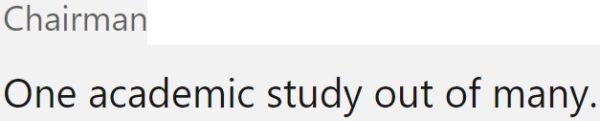
FT commenters typically post under a username, not their real name, so you might dismiss the remark as being by an irrelevant person. What he or she thinks about sustainable investing makes no difference to the world. But on LinkedIn, you see who the posts come from, as well as who they work for and their job title. Senior people, who might invest millions of dollars based on their belief that sustainability pays off, reacted with equal anger. Here’s an example:

A chairman (name of organisation redacted) dismissed it as ‘one academic study out of many’. But the same chairman frequently parades single studies that give conclusions that he likes.
Confirmation bias can be so strong that it doesn’t just cause us to make up reasons to dismiss inconvenient truths. It pushes us even further — we simply reject them out of hand, no explanation needed.


